
Disney Trespass Ban in Florida: TikTok Stunts, Holiday Crackdowns, and What Really Happens
Quick answer: Yes, Disney can trespass and ban you from its Florida parks, and law enforcement can arrest you if you return after a warning. Viral TikTok stunts and busy holiday seasons mean security watches guests more closely than ever, so one bad decision can quickly turn into a criminal trespass case.
Want quick answers? Jump to the Disney trespass FAQs.
PAGE CONTENTS
- What Does It Mean to Be Trespassed from Disney?
- Why Viral TikTok Stunts Are Leading to More Park Ejections
- Holiday Crackdowns: Why Disney Shows Less Flexibility Now
- How Disney’s Updated Security Policies Affect Your Case
- Florida Trespass Law and “Trespass After Warning”
- Other Florida Theme Parks Are Cracking Down Too
- What Usually Happens During a Disney Trespass Incident?
- Can Disney Ever Lift a Trespass Ban?
- How a Florida Criminal Defense Lawyer Helps with Disney Trespass Cases
- Common Questions About Theme Park Bans and Trespassing
- Can Disney really ban me for life?
- Is a Disney trespass ban the same thing as a criminal charge?
- What happens if I go back to Disney after being trespassed?
- Can my child’s behavior get our whole family trespassed?
- Should I talk to police or Disney security without a lawyer?
- Can I remove a Disney trespass ban from my record?
- Arrested or Trespassed at Disney? Fighter Law Can Help.
In the last few years, social media has pushed some guests to test the limits at Disney and other Florida theme parks. People sneak into backstage areas, stay after closing, or stage risky stunts for TikTok and YouTube. These videos may look like harmless fun, but security and police often treat them as serious safety issues.
At the same time, Disney has strengthened its security policies and works closely with law enforcement, especially around busy holiday periods. If you or your child now faces a trespass ban or criminal charge, you need to understand how Disney trespass bans work in Florida and what you can still do to protect your record.
What Does It Mean to Be Trespassed from Disney?
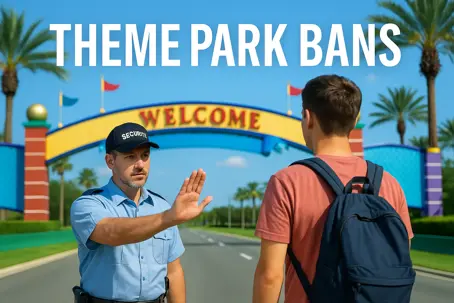
When Disney “trespasses” you, a security officer or law enforcement officer tells you that you no longer have permission to be on Disney property. Often, you sign or receive a written trespass notice. That notice usually applies to:
- All four Walt Disney World theme parks
- Water parks and resort hotels
- Disney Springs and other Disney-controlled property
After that notice, you place yourself at risk if you return. Under Florida law, going back after a clear warning can support a trespass after warning charge. Buying a valid ticket does not erase the warning. If security recognizes you and calls law enforcement, you may leave in handcuffs instead of with a souvenir photo.
Disney’s published Walt Disney World Resort Property Rules explain that the company may remove guests and deny re-entry when they break rules or pose a safety risk. Those rules, combined with Florida’s trespass statutes, give Disney wide power to issue and enforce bans.
Why Viral TikTok Stunts Are Leading to More Park Ejections
Social media rewards shocking content. Some guests chase views by doing things the parks specifically forbid. Recent news stories have described guests:
- Crossing fences or “Cast Members Only” signs to film backstage
- Roaming around after closing to record “abandoned” park videos
- Climbing props, stages, or ride structures for dramatic shots
- Running into parade routes or show areas during performances
These acts may not injure anyone in the moment, but they can endanger workers, other guests, and the person filming. Security teams watch for this behavior. When they identify a stunt like this, they often detain the guest, issue a trespass ban, and notify law enforcement.
A guest might say, “I did it for TikTok,” but that does not reduce the legal risk. In the eyes of the park and the police, the guest chose to ignore clear barriers and warnings. That choice can support criminal charges and a long-term ban from the property.

Holiday Crackdowns: Why Disney Shows Less Flexibility Now
Holiday seasons bring the largest crowds of the year. On those days, Disney must move thousands of people through tight spaces while keeping everyone safe. During Christmas, New Year’s, spring break, and major events, security tends to act much faster and more firmly.
Around those times, Disney focuses on:
- Preventing fights and alcohol-related incidents
- Keeping lines orderly and stopping “creative shortcuts”
- Protecting cast members from harassment and threats
- Making sure guests leave once the park or event closes
On a slow weekday, a minor argument might end with a warning. On a packed holiday night, that same behavior may lead to a trespass ban. If a guest tries to stay in the park for an after-hours event without a proper wristband or ticket, security often removes them and sometimes trespasses them. The busier the park, the less room Disney has to overlook risky behavior.
How Disney’s Updated Security Policies Affect Your Case
Disney rarely reveals all the details of its security systems, but it clearly states that it screens guests and belongings and reserves the right to deny entry or remove anyone who violates the rules. Over time, the company has added more cameras, more screening, and closer cooperation with law enforcement.
From a guest’s point of view, that usually means:
- More cameras and monitoring in ride queues, common areas, and entrances
- Faster responses to reports of unsafe or disruptive behavior
- Closer follow-up on guests who already received a warning or ban
- Firm enforcement of bans once security learns you returned
Disney also keeps a strict policy against weapons. Florida’s laws about carrying firearms have changed, but Disney’s rules have not. Firearms, ammunition, knives, and other weapons remain prohibited on Disney property. Guests who bring them risk removal, a trespass ban, and possible criminal charges.
If you received a ban in the past, these policies raise the odds that security will notice a return visit. Once security confirms your identity, they often treat the situation as trespass after warning instead of a fresh misunderstanding.
Florida Trespass Law and “Trespass After Warning”
Florida’s trespass laws give property owners strong rights. Under Chapter 810 of the Florida Statutes, a person commits trespass when they enter or stay on property without permission or after a clear warning.
In a theme park setting, a typical case might look like this:
- Security issues a written trespass notice and escorts the guest off Disney property.
- The guest decides to return weeks or months later and enters with a ticket.
- Security or law enforcement identifies the guest as trespassed.
- The guest gets arrested for trespass after warning and must appear in court.
Many trespass cases start as misdemeanors. If other charges get added – such as battery, theft, or resisting an officer – the case can grow much more serious. A conviction can affect work, housing, travel, and immigration status. In some situations, it can remain on your record for life unless you qualify to seal or expunge it.
Other Florida Theme Parks Are Cracking Down Too
Disney is not alone. Other Central Florida theme parks, including Universal Orlando and SeaWorld Orlando, have strengthened security and guest conduct policies as well. They also rely on trespass warnings and bans to deal with behavior they see as risky.
- Universal Orlando enforces rules against weapons, threatening conduct, ticket fraud, and line-jumping. Guests who break those rules may receive a trespass warning or ban.
- SeaWorld Orlando focuses on crowd control, animal safety, and ride safety. Guests can face removal or trespass warnings for vandalism, disorderly conduct, or entering restricted areas.
If any of these parks trespassed you, Florida’s trespass laws still apply. Returning after a warning puts you at risk of arrest, even if you think enough time has passed or you bought a valid ticket.

What Usually Happens During a Disney Trespass Incident?
In many cases, security first removes you from the public area. You may go to a backstage security office or another private location. There, officers usually:
- Ask for identification and basic information
- Gather statements about what happened
- Explain that you no longer have permission to return
- Ask you to sign or accept a trespass notice
- Escort you off the property
In more serious incidents, law enforcement may arrest you right away. That often happens when the situation includes violence, threats, property damage, or prior warnings. The officer can take you to jail or issue a notice to appear in court at a later date.
After the incident, you may want to ask Disney to reconsider the ban. Disney has no formal appeal system that looks like a court hearing, and the company does not have to lift the ban. However, in some situations, a well-prepared request can help.
Can Disney Ever Lift a Trespass Ban?
Sometimes, yes. Disney has complete control over its property and its decisions, but it may agree to a review. In our experience, the company tends to focus on guest safety, the seriousness of the incident, and whether you have shown real change over time.
A strong request often includes:
- An honest, concise explanation of what happened
- Proof that any criminal case ended or that you completed your sentence
- Steps you took since the incident, such as counseling or treatment
- Specific reasons why returning to Disney matters to you and your family
Because these requests can also touch on legal issues, it helps to speak with a Florida criminal defense lawyer who understands both the trespass law and how theme parks handle bans.
How a Florida Criminal Defense Lawyer Helps with Disney Trespass Cases
A Disney trespass ban can affect more than vacations. It can tie into criminal charges, a permanent record, and future background checks. When you involve an attorney early, you give yourself the best chance to control the damage.
An experienced lawyer can:
- Review the details of the incident and any trespass notice
- Explain the charges and possible defenses under Florida law
- Talk with prosecutors and seek to reduce or resolve the case
- Advise you about asking Disney to review the ban
- Help you explore record sealing or expungement when the law allows it
At Fighter Law, trespass cases form part of our broader Florida criminal trespass defense practice. We have helped guests, locals, and families who never thought a day at Disney could lead to a criminal case.

Common Questions About Theme Park Bans and Trespassing
Can Disney really ban me for life?
Yes. Disney can issue an indefinite ban and treat it as a lifetime decision. In some situations, the company later agrees to review the ban, especially when enough time has passed and any criminal case ended. A review never happens automatically, so you usually need to ask and present your case carefully.
Is a Disney trespass ban the same thing as a criminal charge?
No. A ban is a property decision. However, if you return after the warning, the State of Florida can charge you with criminal trespass. Some bans also begin with criminal allegations such as disorderly conduct, battery, theft, or resisting an officer. In those cases, you may face both a criminal case and a long-term trespass issue.
What happens if I go back to Disney after being trespassed?
When you return after a warning, you take a major legal risk. Security can detain you, contact law enforcement, and support a trespass after warning charge. Officers may arrest you, and you will likely need to appear in court. If you are unsure whether a ban still applies, talk with a lawyer before you step onto the property again.
Can my child’s behavior get our whole family trespassed?
Yes. Disney sometimes looks at the group as a whole. When a child or teen acts out and a parent escalates the situation instead of calming it, security may trespass more than one person. That possibility makes it even more important to stay calm, follow instructions, and get legal help if things spiral.
Should I talk to police or Disney security without a lawyer?
You should follow lawful commands and remain respectful, but you do not have to answer detailed questions without legal advice. Anything you say can end up in a police report or court file. If you feel pressured to explain yourself, you can politely state that you wish to speak with an attorney first.
Can I remove a Disney trespass ban from my record?
The ban itself is not a public court record. It is an internal property decision. However, any related criminal charges may appear in background checks. In some situations, you may qualify to seal or expunge eligible Florida criminal records. An attorney can review your history and explain your options.
Arrested or Trespassed at Disney? Fighter Law Can Help.
If a day at Disney ended with a trespass notice, an arrest, or both, you do not need to handle everything on your own. A single incident should not define your future or your family’s ability to enjoy Florida’s theme parks.
Our criminal defense team at Fighter Law helps people facing trespass and related charges throughout Central Florida. We understand how Disney, prosecutors, and judges view these cases. Let us review your situation, explain your options, and fight for the best result the law allows.
Nothing in this article is legal advice for your specific situation. Every case is different. To get advice about your case, contact a Florida attorney for a confidential consultation.
Quick answer: Yes, Disney can trespass and ban you from its Florida parks, and law enforcement can arrest you if you return after a warning. Viral TikTok stunts and busy holiday seasons mean security watches guests more closely than ever, so one bad decision can quickly turn into a criminal trespass case.
Want quick answers? Jump to the Disney trespass FAQs.
PAGE CONTENTS
- What Does It Mean to Be Trespassed from Disney?
- Why Viral TikTok Stunts Are Leading to More Park Ejections
- Holiday Crackdowns: Why Disney Shows Less Flexibility Now
- How Disney’s Updated Security Policies Affect Your Case
- Florida Trespass Law and “Trespass After Warning”
- Other Florida Theme Parks Are Cracking Down Too
- What Usually Happens During a Disney Trespass Incident?
- Can Disney Ever Lift a Trespass Ban?
- How a Florida Criminal Defense Lawyer Helps with Disney Trespass Cases
- Common Questions About Theme Park Bans and Trespassing
- Can Disney really ban me for life?
- Is a Disney trespass ban the same thing as a criminal charge?
- What happens if I go back to Disney after being trespassed?
- Can my child’s behavior get our whole family trespassed?
- Should I talk to police or Disney security without a lawyer?
- Can I remove a Disney trespass ban from my record?
- Arrested or Trespassed at Disney? Fighter Law Can Help.
In the last few years, social media has pushed some guests to test the limits at Disney and other Florida theme parks. People sneak into backstage areas, stay after closing, or stage risky stunts for TikTok and YouTube. These videos may look like harmless fun, but security and police often treat them as serious safety issues.
At the same time, Disney has strengthened its security policies and works closely with law enforcement, especially around busy holiday periods. If you or your child now faces a trespass ban or criminal charge, you need to understand how Disney trespass bans work in Florida and what you can still do to protect your record.
What Does It Mean to Be Trespassed from Disney?
When Disney “trespasses” you, a security officer or law enforcement officer tells you that you no longer have permission to be on Disney property. Often, you sign or receive a written trespass notice. That notice usually applies to:
- All four Walt Disney World theme parks
- Water parks and resort hotels
- Disney Springs and other Disney-controlled property
After that notice, you place yourself at risk if you return. Under Florida law, going back after a clear warning can support a trespass after warning charge. Buying a valid ticket does not erase the warning. If security recognizes you and calls law enforcement, you may leave in handcuffs instead of with a souvenir photo.
Disney’s published Walt Disney World Resort Property Rules explain that the company may remove guests and deny re-entry when they break rules or pose a safety risk. Those rules, combined with Florida’s trespass statutes, give Disney wide power to issue and enforce bans.
Why Viral TikTok Stunts Are Leading to More Park Ejections
Social media rewards shocking content. Some guests chase views by doing things the parks specifically forbid. Recent news stories have described guests:
- Crossing fences or “Cast Members Only” signs to film backstage
- Roaming around after closing to record “abandoned” park videos
- Climbing props, stages, or ride structures for dramatic shots
- Running into parade routes or show areas during performances
These acts may not injure anyone in the moment, but they can endanger workers, other guests, and the person filming. Security teams watch for this behavior. When they identify a stunt like this, they often detain the guest, issue a trespass ban, and notify law enforcement.
A guest might say, “I did it for TikTok,” but that does not reduce the legal risk. In the eyes of the park and the police, the guest chose to ignore clear barriers and warnings. That choice can support criminal charges and a long-term ban from the property.
Holiday Crackdowns: Why Disney Shows Less Flexibility Now
Holiday seasons bring the largest crowds of the year. On those days, Disney must move thousands of people through tight spaces while keeping everyone safe. During Christmas, New Year’s, spring break, and major events, security tends to act much faster and more firmly.
Around those times, Disney focuses on:
- Preventing fights and alcohol-related incidents
- Keeping lines orderly and stopping “creative shortcuts”
- Protecting cast members from harassment and threats
- Making sure guests leave once the park or event closes
On a slow weekday, a minor argument might end with a warning. On a packed holiday night, that same behavior may lead to a trespass ban. If a guest tries to stay in the park for an after-hours event without a proper wristband or ticket, security often removes them and sometimes trespasses them. The busier the park, the less room Disney has to overlook risky behavior.
How Disney’s Updated Security Policies Affect Your Case
Disney rarely reveals all the details of its security systems, but it clearly states that it screens guests and belongings and reserves the right to deny entry or remove anyone who violates the rules. Over time, the company has added more cameras, more screening, and closer cooperation with law enforcement.
From a guest’s point of view, that usually means:
- More cameras and monitoring in ride queues, common areas, and entrances
- Faster responses to reports of unsafe or disruptive behavior
- Closer follow-up on guests who already received a warning or ban
- Firm enforcement of bans once security learns you returned
Disney also keeps a strict policy against weapons. Florida’s laws about carrying firearms have changed, but Disney’s rules have not. Firearms, ammunition, knives, and other weapons remain prohibited on Disney property. Guests who bring them risk removal, a trespass ban, and possible criminal charges.
If you received a ban in the past, these policies raise the odds that security will notice a return visit. Once security confirms your identity, they often treat the situation as trespass after warning instead of a fresh misunderstanding.
Florida Trespass Law and “Trespass After Warning”
Florida’s trespass laws give property owners strong rights. Under Chapter 810 of the Florida Statutes, a person commits trespass when they enter or stay on property without permission or after a clear warning.
In a theme park setting, a typical case might look like this:
- Security issues a written trespass notice and escorts the guest off Disney property.
- The guest decides to return weeks or months later and enters with a ticket.
- Security or law enforcement identifies the guest as trespassed.
- The guest gets arrested for trespass after warning and must appear in court.
Many trespass cases start as misdemeanors. If other charges get added – such as battery, theft, or resisting an officer – the case can grow much more serious. A conviction can affect work, housing, travel, and immigration status. In some situations, it can remain on your record for life unless you qualify to seal or expunge it.
Other Florida Theme Parks Are Cracking Down Too
Disney is not alone. Other Central Florida theme parks, including Universal Orlando and SeaWorld Orlando, have strengthened security and guest conduct policies as well. They also rely on trespass warnings and bans to deal with behavior they see as risky.
- Universal Orlando enforces rules against weapons, threatening conduct, ticket fraud, and line-jumping. Guests who break those rules may receive a trespass warning or ban.
- SeaWorld Orlando focuses on crowd control, animal safety, and ride safety. Guests can face removal or trespass warnings for vandalism, disorderly conduct, or entering restricted areas.
If any of these parks trespassed you, Florida’s trespass laws still apply. Returning after a warning puts you at risk of arrest, even if you think enough time has passed or you bought a valid ticket.
What Usually Happens During a Disney Trespass Incident?
In many cases, security first removes you from the public area. You may go to a backstage security office or another private location. There, officers usually:
- Ask for identification and basic information
- Gather statements about what happened
- Explain that you no longer have permission to return
- Ask you to sign or accept a trespass notice
- Escort you off the property
In more serious incidents, law enforcement may arrest you right away. That often happens when the situation includes violence, threats, property damage, or prior warnings. The officer can take you to jail or issue a notice to appear in court at a later date.
After the incident, you may want to ask Disney to reconsider the ban. Disney has no formal appeal system that looks like a court hearing, and the company does not have to lift the ban. However, in some situations, a well-prepared request can help.
Can Disney Ever Lift a Trespass Ban?
Sometimes, yes. Disney has complete control over its property and its decisions, but it may agree to a review. In our experience, the company tends to focus on guest safety, the seriousness of the incident, and whether you have shown real change over time.
A strong request often includes:
- An honest, concise explanation of what happened
- Proof that any criminal case ended or that you completed your sentence
- Steps you took since the incident, such as counseling or treatment
- Specific reasons why returning to Disney matters to you and your family
Because these requests can also touch on legal issues, it helps to speak with a Florida criminal defense lawyer who understands both the trespass law and how theme parks handle bans.
How a Florida Criminal Defense Lawyer Helps with Disney Trespass Cases
A Disney trespass ban can affect more than vacations. It can tie into criminal charges, a permanent record, and future background checks. When you involve an attorney early, you give yourself the best chance to control the damage.
An experienced lawyer can:
- Review the details of the incident and any trespass notice
- Explain the charges and possible defenses under Florida law
- Talk with prosecutors and seek to reduce or resolve the case
- Advise you about asking Disney to review the ban
- Help you explore record sealing or expungement when the law allows it
At Fighter Law, trespass cases form part of our broader Florida criminal trespass defense practice. We have helped guests, locals, and families who never thought a day at Disney could lead to a criminal case.
Common Questions About Theme Park Bans and Trespassing
Can Disney really ban me for life?
Yes. Disney can issue an indefinite ban and treat it as a lifetime decision. In some situations, the company later agrees to review the ban, especially when enough time has passed and any criminal case ended. A review never happens automatically, so you usually need to ask and present your case carefully.
Is a Disney trespass ban the same thing as a criminal charge?
No. A ban is a property decision. However, if you return after the warning, the State of Florida can charge you with criminal trespass. Some bans also begin with criminal allegations such as disorderly conduct, battery, theft, or resisting an officer. In those cases, you may face both a criminal case and a long-term trespass issue.
What happens if I go back to Disney after being trespassed?
When you return after a warning, you take a major legal risk. Security can detain you, contact law enforcement, and support a trespass after warning charge. Officers may arrest you, and you will likely need to appear in court. If you are unsure whether a ban still applies, talk with a lawyer before you step onto the property again.
Can my child’s behavior get our whole family trespassed?
Yes. Disney sometimes looks at the group as a whole. When a child or teen acts out and a parent escalates the situation instead of calming it, security may trespass more than one person. That possibility makes it even more important to stay calm, follow instructions, and get legal help if things spiral.
Should I talk to police or Disney security without a lawyer?
You should follow lawful commands and remain respectful, but you do not have to answer detailed questions without legal advice. Anything you say can end up in a police report or court file. If you feel pressured to explain yourself, you can politely state that you wish to speak with an attorney first.
Can I remove a Disney trespass ban from my record?
The ban itself is not a public court record. It is an internal property decision. However, any related criminal charges may appear in background checks. In some situations, you may qualify to seal or expunge eligible Florida criminal records. An attorney can review your history and explain your options.
Arrested or Trespassed at Disney? Fighter Law Can Help.
If a day at Disney ended with a trespass notice, an arrest, or both, you do not need to handle everything on your own. A single incident should not define your future or your family’s ability to enjoy Florida’s theme parks.
Our criminal defense team at Fighter Law helps people facing trespass and related charges throughout Central Florida. We understand how Disney, prosecutors, and judges view these cases. Let us review your situation, explain your options, and fight for the best result the law allows.
Nothing in this article is legal advice for your specific situation. Every case is different. To get advice about your case, contact a Florida attorney for a confidential consultation.