PAGE CONTENTS
Injunctions (also known as restraining orders) can have serious consequences. In many
stalking injunction and
domestic violence injunction
cases, organized, credible text-message evidence can be the difference between a temporary order being dismissed or becoming final.
This video explains how to get text messages admitted at an injunction hearing in Florida and, when needed, how to pursue third-party records (like AT&T or Verizon)
to prove you are being harassed—or to prove you did not send the messages.
Text messages can be admitted in Florida courts, but the judge may require a foundation showing the messages are authentic. In practice, most cases use one (or more) of these approaches:
Practical tip: In many injunction hearings, screenshots plus clear testimony can be enough. But if the other side claims “spoofing,” “fake texts,” or “someone else sent them,” you may need stronger corroboration (carrier logs, device history, IP-related records, or other circumstantial proof).
Subpoenas can be useful when (a) the sender is disputed, (b) the communications are voluminous, or (c) you need records to rebut an accusation.
If you’re the respondent and the injunction has criminal exposure, review:
Can I go to jail for violating an injunction?
Florida procedure for obtaining documents from nonparties commonly involves notice, a waiting period for objections, and then issuance/service of the subpoena.
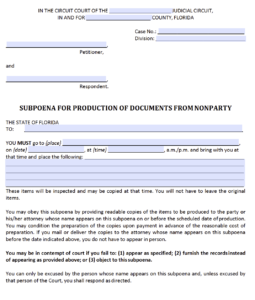
The Florida Courts site provides public versions of the “Notice of Production from Nonparty” and “Subpoena for Production of Documents from Nonparty.”
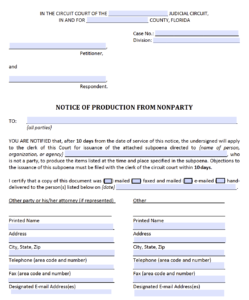
Form 12.931(a) is commonly used to notify the other side of the intent to subpoena documents from a nonparty, and the PDF includes timing guidance.
Florida Courts also provides Form 12.931(b) on its family-law forms pages.
Spoofing claims usually require a more organized approach. You may need to lock in details through discovery (where allowed),
then seek provider/device records to corroborate what happened. If you’re dealing with cyberstalking issues, you may also find this helpful:
Grounds for a cyberstalking injunction in Florida.
Whether you are seeking protection or defending against accusations, the hearing comes fast and the evidence needs to be organized.
Start with our main hub: Restraining Orders & Injunctions,
or read: How to fight a restraining order in Florida.
Important: This is general educational information, not legal advice. Injunction procedure can vary by court and case posture. If you need help, call 407-344-4837.
Costs vary widely by provider and what you are requesting. Some providers charge processing and copy fees, and the cost can increase if you need additional
steps (motions, hearings, compliance follow-up). If the other side objects, attorney time and court time can add expense.
The most common challenge is authentication—arguing there is not enough proof the messages are what the other side claims they are, or that the sender
is not reliably established. Other objections can include relevance, unfair prejudice, altered content, or foundational problems with screenshots.
It depends on the provider’s retention policies. Message content is often retained for a limited time, while account logs (dates/times/numbers) may be available longer.
If you think records matter, it’s usually best to act quickly.
It can take weeks or longer. You typically have a notice period for objections, then provider processing time varies. If there is an objection hearing or provider-specific
compliance requirements, it can take longer.
Proving spoofing may require technical and circumstantial evidence—such as device records, provider logs, IP-related information, and consistent testimony.
In some cases, digital forensics can help clarify what occurred and who likely controlled the account or device at the time.
Reminder: After publishing, also populate your separate WordPress FAQ block/section for this page so the FAQs appear in both places.
Fill out the form below for an free evaluation of your case.






 Call Now