PAGE CONTENTS
If you’re dealing with a restraining order in Seminole County, the stakes can feel immediate. In Florida, most people say “restraining order,” but the court process is usually an injunction for protection. Whether you need protection or you were served and must defend yourself, the sooner you understand the local process, the better prepared you’ll be.
If you’re searching by courthouse city, you may also want our local Sanford page:
Sanford injunction lawyer.
For a statewide overview, start here:
Restraining Orders and Injunctions.
Injunction paperwork usually lists the county and judicial circuit so you know which court has authority over your case.
In Seminole County, many matters are connected to Sanford because that’s where major county court facilities are located.
Your documents will also tell you whether a temporary injunction was entered and the date of the final hearing.
Hearing locations can vary based on the type of injunction and the division assigned. If you’re unsure, confirm the location on your Notice of Hearing or by checking with the clerk.
For reference, here is a major Seminole County facility many people recognize from other county court matters:
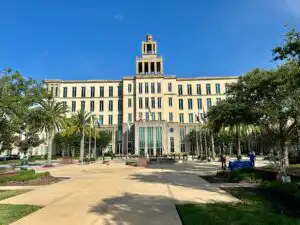
Tip: plan to arrive early. Parking in Sanford can be tight at peak times, while security lines are usually manageable compared to larger downtown courthouses.
Our injunction attorneys assist clients throughout Seminole County. If your case is tied to a specific city, see the local guidance below:
The right strategy depends on the type of injunction, the relationship between the parties, and what evidence is actually available.
Common categories include:
Petitioner = the person requesting the injunction.
Respondent = the person who was served and must respond at the final hearing.
Either way, judges usually focus on specific facts, credible documents, and whether the legal requirements are met.
Even though injunctions are civil, the consequences can feel like a criminal case: restrictions on movement, no-contact orders, potential housing disruption, and firearm surrender.
A Seminole County injunction lawyer can help you organize evidence, prepare testimony, subpoena records when appropriate, and present the case clearly so the judge can focus on what matters.
These official resources explain the legal framework (not legal advice):
Fla. Stat. § 741.30,
Fla. Stat. § 784.046,
and Fla. Stat. § 784.048.
You generally file a sworn petition with the clerk in the county where the case belongs. A judge may enter a temporary injunction and set a final hearing where both sides can present evidence.
Temporary orders can be entered quickly. The final hearing is usually set soon after service, and that hearing often determines whether any long-term restrictions will be imposed.
It depends on the type of injunction. Judges look at testimony and evidence and decide whether the statutory requirements are met.
Many injunction petitions do not require a filing fee, but other costs can still apply depending on what evidence is needed and what filings are required.
Violations can lead to arrest and criminal charges. Even “small” or indirect contact can create serious problems, so it’s important to understand the terms immediately.
If you need help filing for protection or defending against a petition in Seminole County, we can help you understand timelines, prepare evidence, and show up ready for court.
Florida Bar notice: Prior results do not guarantee a similar outcome. This content is for general information only and does not create an attorney-client relationship.
Fill out the form below for an free evaluation of your case.





 Call Now