Being banned from a theme park is serious. In Florida and California, Disney can issue a trespass warning or ban if a guest violates park rules, engages in disorderly conduct, or is accused of certain offenses. Because Disney operates its properties privately, it has broad authority to restrict access.
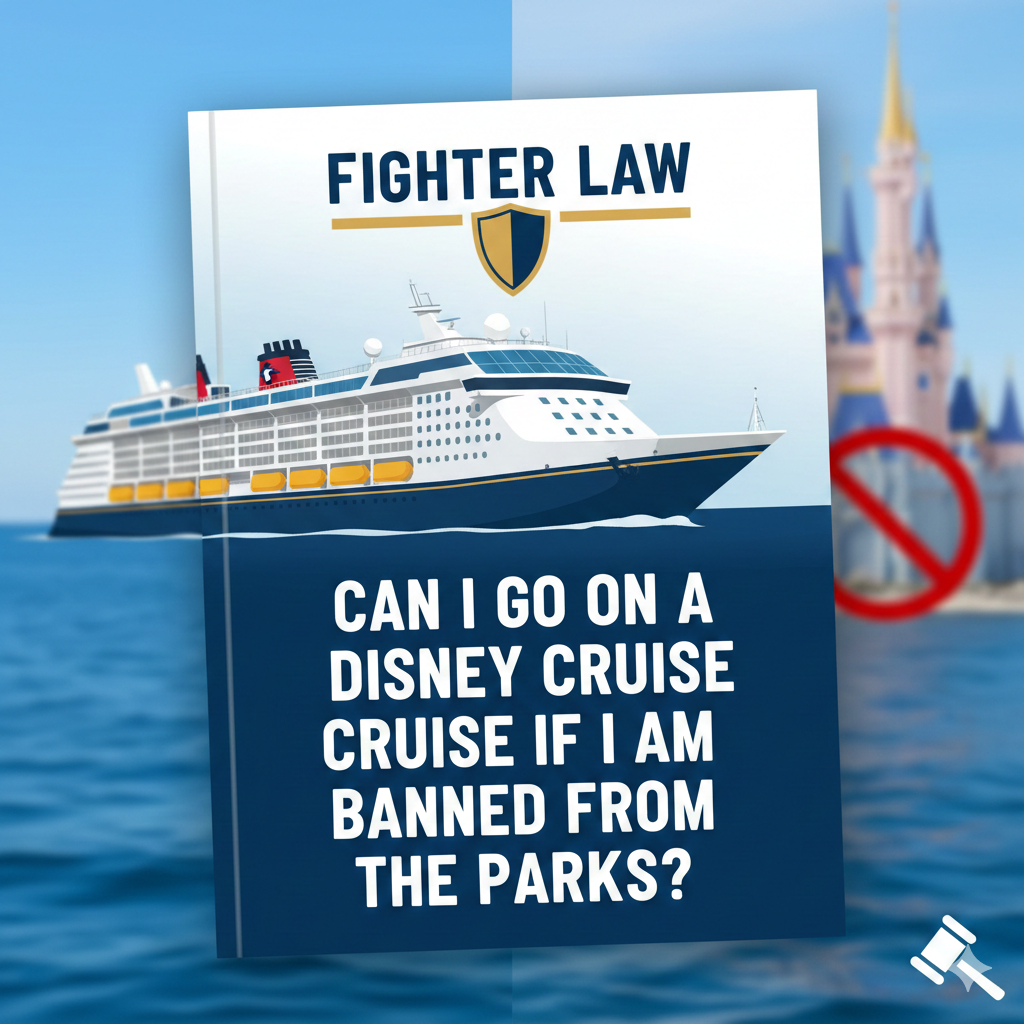
However, Disney Cruise Line operates separately from the parks, even though it is under the same corporate umbrella. A park ban does not automatically cancel cruise reservations. That said, Disney reserves the right to deny boarding if it determines a guest poses a policy or safety concern.
The key issue is whether your ban was limited to specific park property or whether Disney issued a broader company-wide restriction. In many cases, the wording of the trespass warning or ban letter matters. Some bans are location-specific; others apply to all Disney-owned properties.
Another factor is how the cruise booking is made. If you book under your own name and identification, Disney’s systems may flag prior enforcement actions. If there is an active company-wide ban, attempting to board could result in denial at the port—often without refund.
These cases can be confusing because Disney policies are not always publicly detailed. Unlike criminal penalties, private property bans are governed largely by company policy rather than statute. That makes it important to review your specific documentation carefully.
Sometimes people assume that because a cruise departs from a port and travels internationally, the park ban becomes irrelevant. That is not necessarily true. Cruise terminals used by Disney are part of Disney’s controlled operations during embarkation, and Disney retains authority over who boards its ships.
If your ban resulted from an arrest or criminal charge, the underlying case may also affect travel eligibility. Even if Disney does not enforce a broad ban, other legal issues—such as probation terms—could limit your ability to travel.
FAQs About Disney Cruise Travel After a Park Ban
How do I know if my Disney ban applies to cruises?
Review the written trespass warning or ban notice carefully. Some bans specify particular properties (such as a single park), while others reference all Disney-owned properties.
Will Disney automatically cancel my cruise reservation if I am banned from the parks?
Not automatically—but Disney may review reservations and deny boarding if your ban applies company-wide.
Can I book a cruise under someone else’s name if I am banned?
Attempting to bypass a ban can create additional legal problems. Cruise passengers must present valid identification at embarkation.
Does a park trespass warning mean I committed a crime?
Not necessarily. A trespass warning can be issued even without a criminal conviction. However, returning to property after receiving a trespass warning can lead to criminal charges.
Can a lawyer help me lift or clarify a Disney ban?
In some cases, an attorney may be able to communicate with corporate security or review whether the ban was properly issued or overly broad.
Practical Questions People Ask Before Booking a Cruise
What happens if I show up at the port and Disney denies boarding?
You may be refused boarding, and refund eligibility depends on the ticket contract terms.
Can I wait until my park ban expires before booking a cruise?
If the ban is time-limited, waiting until expiration reduces the risk of denial.
Are Disney Cruise Line and the theme parks legally separate?
They operate as related corporate entities under The Walt Disney Company, but Disney maintains discretion across its properties.
Should I contact Disney before booking a cruise?
If you are unsure about the scope of your ban, clarifying beforehand may prevent financial loss.
What should I do right after receiving a park ban if I plan to travel in the future?
Keep all paperwork, avoid returning to restricted property, and consult with a lawyer if the ban appears overly broad or indefinite.
Reminder: If you use a separate WordPress FAQ block/module, also paste these FAQs there so Google can read them consistently in both the page content and structured data.