Theme parks in Florida operate on private property. That means companies like Walt Disney World, Universal Orlando Resort, and SeaWorld Orlando generally have the legal right to remove guests or issue trespass warnings if they believe park rules were violated.
In many situations, a child’s conduct—such as fighting, repeated rule violations, unsafe behavior on rides, property damage, or aggressive conduct toward staff—can result in removal from the park. If security determines that supervision was inadequate or that the incident involved the entire group, they may issue a trespass warning or ban that applies to the whole family.
Florida trespass warnings are often broader than people expect. Sometimes they apply to all properties owned by the same company. In other cases, they may be temporary (one year) or permanent. The paperwork issued at the time of removal usually controls the scope and duration of the ban.
One common misunderstanding is that “it was just a kid being a kid.” From a legal standpoint, theme parks focus on safety, liability, and guest experience. If management believes the conduct created a safety issue—or exposed them to potential legal risk—they may take firm action regardless of age.
Another concern is whether a ban means criminal charges. Not necessarily. A trespass warning itself is typically civil in nature. However, returning to the property after receiving a valid trespass notice can lead to arrest for trespassing under Florida law.
Parents are often surprised to learn that you cannot simply “argue it out” at the front gate later. Once a formal trespass notice is issued, attempting to re-enter without resolving the matter can escalate the situation quickly.
In some cases, bans are based on misunderstandings, exaggerated reports, or incomplete information. Security decisions are often made quickly. If the record does not accurately reflect what happened—or if the punishment appears disproportionate—there may be options to seek clarification, reconsideration, or legal review.
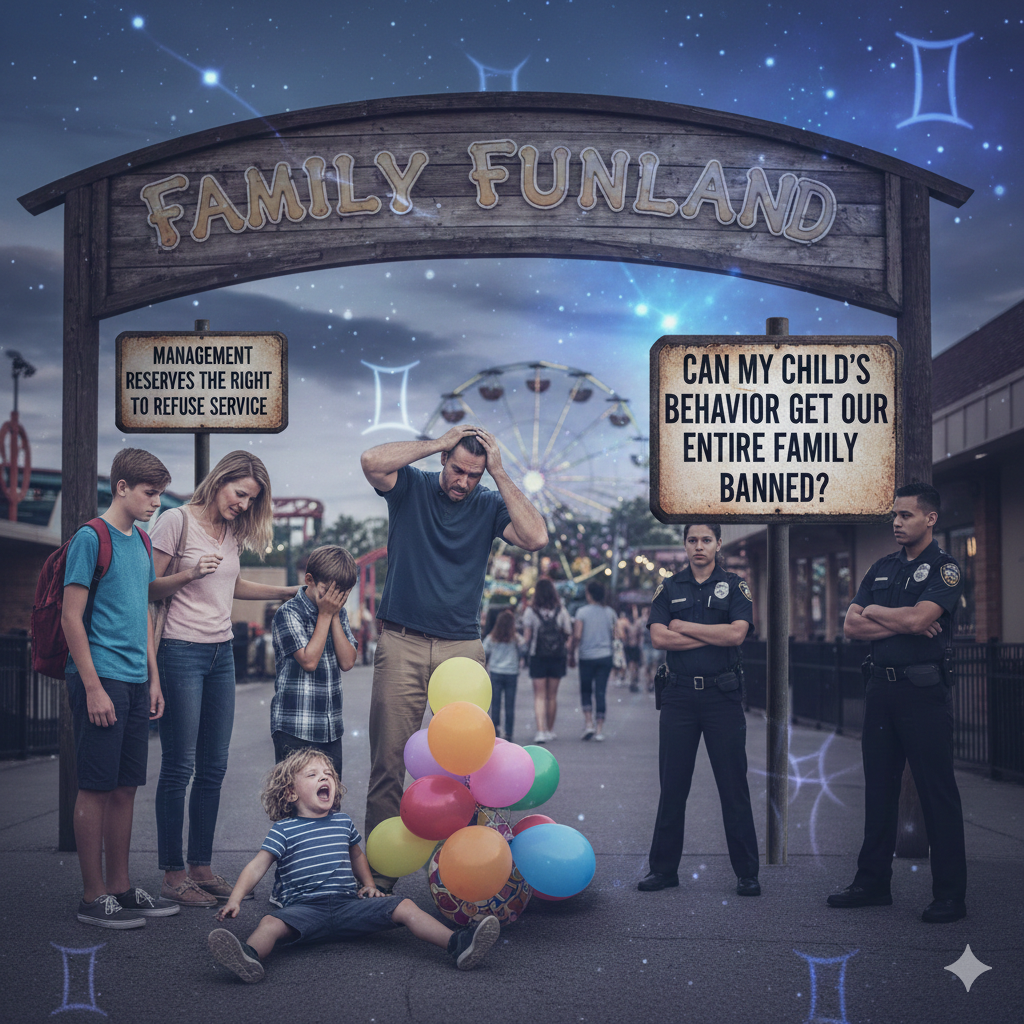
Theme park security issuing a trespass warning that may affect an entire family.
FAQs About Theme Park Family Bans in Florida
How can my child’s behavior lead to a family-wide ban?
If park security believes the child’s actions involved the family unit, were encouraged, or resulted from inadequate supervision, they may issue a trespass notice covering everyone in the group.
Are theme parks legally allowed to ban minors?
Yes. Because theme parks operate on private property, they can remove or ban guests—including minors—who violate park rules, subject to anti-discrimination laws.
How long does a Florida theme park ban last?
It depends on the notice. Some bans are temporary (for example, one year), while others may be indefinite or permanent. The written trespass warning controls.
Does a ban apply to all parks owned by the same company?
Sometimes. Large resort operators may issue trespass notices covering all properties they own in Florida. Always review the specific language in the notice.
Can we appeal or challenge a theme park ban?
There is no formal “court appeal” process like in criminal cases. However, an attorney can sometimes contact the company’s legal department to request clarification, modification, or reconsideration depending on the circumstances.
Will this affect our annual passes?
Yes, it can. Annual passes are contractual privileges. A trespass notice may result in cancellation without refund, depending on the pass agreement terms.
Practical Questions Parents Ask After a Theme Park Ban
Should we try to go back and explain our side?
No. If a formal trespass warning was issued, returning to the property without resolving it can lead to criminal trespass charges.
What should we do immediately after being banned?
Keep all paperwork. Write down what happened while it is fresh. Identify witnesses. Avoid social media posts that could be misinterpreted.
Can a misunderstanding be corrected?
Sometimes. If the incident was minor, based on incorrect information, or escalated unnecessarily, legal counsel may be able to open communication and request review.
Is it worth hiring a lawyer over a theme park ban?
It depends on the impact. If the ban is long-term, affects annual passes, includes multiple properties, or could lead to criminal exposure if violated, speaking with a lawyer can help protect your family’s rights and clarify your options.
Reminder: If you use a separate WordPress FAQ block/module, also paste these FAQs there so Google can read them consistently in both the page content and structured data.